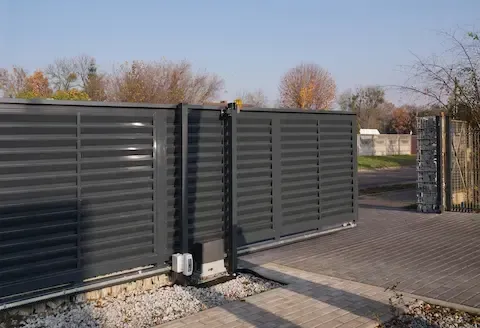
Automatic Gate Installation in Abilene Taylor County
Understanding Automatic Gate Systems for Your Property
Installing an automatic gate on your Abilene property transforms both security and convenience. These sophisticated systems combine mechanical operators, electronic controls, and safety features to create seamless entry points for residential and commercial properties throughout Taylor County.
The West Texas climate presents unique considerations for automatic gate installations. From summer temperatures exceeding 100 degrees to occasional ice storms, your gate system must withstand extreme weather variations while maintaining reliable operation year-round.
Modern automatic gates utilize either sliding or swing mechanisms, each suited to different property layouts and usage patterns. Sliding gates work well for properties with limited clearance space, while swing gates offer traditional aesthetics with dual-leaf configurations for wider openings.
Choosing Between Sliding and Swing Gate Operators
Sliding gate systems excel in Taylor County's windy conditions, as they're less susceptible to wind load issues compared to swing gates. The track-mounted design distributes weight evenly and requires minimal clearance space inside your property line.
Chain-driven sliding operators provide reliable power transmission with minimal maintenance requirements. These systems typically feature adjustable speed controls and soft-start mechanisms to prevent jerky movements that could stress the gate structure over time.
Swing gate operators offer versatility for properties with existing gates or specific aesthetic requirements. Articulated arm operators work well for gates that need to clear obstacles, while linear operators provide powerful straight-line movement for heavier installations.
Solar-powered options have gained popularity in rural Taylor County areas where electrical access might be limited. These systems incorporate battery backup and can operate for weeks without direct sunlight, making them suitable for remote property locations.
Access Control Integration and Wiring Requirements
Professional wiring installation ensures your automatic gate system integrates seamlessly with various access control methods. Standard installations include provisions for keypad entry, remote control receivers, and vehicle detection loops.
Underground wiring requires careful planning to avoid existing utilities while providing adequate protection from weather and accidental damage. Conduit runs should include extra capacity for future additions like intercom systems or camera integration.
Vehicle detection loops installed in the driveway surface automatically trigger gate opening when vehicles approach from inside the property. This safety feature prevents gates from closing on departing vehicles and provides hands-free exit convenience.
The Automatic Gate Installation process includes programming multiple user codes and remote controls, allowing different access levels for family members, employees, or service personnel.
Smart phone integration has become increasingly popular, enabling remote gate control and monitoring from anywhere with cellular coverage. These systems can send alerts for gate activity, low battery conditions, or maintenance requirements.
Weatherproofing Considerations for West Texas Climate
Taylor County's temperature extremes require specialized components designed for harsh environmental conditions. Control panels need adequate ventilation for summer heat while maintaining weatherproof seals against dust and moisture.
Operator lubricants must perform effectively across temperature ranges from below freezing to over 110 degrees Fahrenheit. Synthetic lubricants typically outperform petroleum-based products in these extreme conditions.
Wind load calculations become critical for swing gate installations, as Abilene's frequent high winds can create significant stress on gate panels and operator mechanisms. Proper sizing prevents premature component failure and ensures reliable operation during storms.
Dust infiltration poses ongoing challenges for moving components. Sealed bearing systems and regular maintenance schedules help prevent premature wear from accumulated particles that are common in West Texas environments.
Lightning protection systems may be necessary for properties in exposed locations. These installations protect sensitive electronic components from power surges during Taylor County's severe thunderstorm seasons.
Safety Features and Code Compliance
Modern automatic gate installations must comply with UL 325 safety standards, which mandate specific safety devices and operational characteristics. These requirements protect pedestrians and vehicles from gate-related injuries.
Photoelectric safety beams create invisible barriers that immediately stop gate movement when interrupted. Multiple beam installations provide comprehensive coverage across the gate opening, with different mounting heights to detect vehicles, pedestrians, and pets.
Emergency release mechanisms allow manual gate operation during power outages or system failures. These releases must be accessible from both sides of the gate while remaining secure against unauthorized manipulation.
Edge safety devices mounted on gate panels detect contact with obstacles and immediately reverse gate direction. These pressure-sensitive systems provide the final safety barrier against entrapment or crushing incidents.
Warning devices including lights and audible alarms alert pedestrians and drivers to gate movement. Visual signals remain visible during bright Abilene sunlight, while audio warnings cut through ambient noise levels.
Common Installation Mistakes and Prevention
Inadequate foundation preparation leads to premature gate sagging and operator strain. Concrete footings must extend below the frost line and provide sufficient mass to anchor heavy gate assemblies against wind loads and operational forces.
Improper operator sizing results in slow operation, excessive power consumption, and premature component failure. Professional load calculations consider gate weight, wind resistance, and usage frequency to select appropriate operator specifications.
Insufficient electrical capacity causes voltage drops that affect operator performance and reduce component lifespan. Dedicated circuits with appropriate wire gauging ensure adequate power delivery under all operating conditions.
Poor drainage around gate tracks and operators creates standing water that leads to corrosion and mechanical problems. Proper grading and drainage systems prevent water accumulation while allowing normal operation during Taylor County's occasional heavy rainfall events.
Inadequate clearance planning can result in gates that interfere with vehicles, landscaping, or property features. Professional surveys identify potential conflicts before installation begins, preventing costly modifications later.
Local Considerations for Abilene Properties
Taylor County's soil conditions vary significantly across the region, affecting foundation requirements for gate installations. Clay soils require different approaches than sandy areas, with expansion and contraction cycles influencing long-term stability.
Local building codes may require permits for automatic gate installations, particularly for commercial properties or gates exceeding certain dimensions. Understanding these requirements prevents delays and ensures compliant installations.
Utility location services become essential in developed areas of Abilene where underground lines are common. Professional installations include proper utility marking to prevent damage during excavation and trenching operations.
The agricultural nature of much of Taylor County means many properties have livestock considerations. Gate systems must accommodate farm equipment passage while maintaining security against animal escape or intrusion.
Consider the commercial fence overview for properties requiring integrated perimeter security, as automatic gates work best when properly matched to existing fence systems and security protocols.
Professional Installation and Ongoing Maintenance
Professional installation ensures proper operator mounting, electrical connections, and safety device calibration. Experienced technicians understand the nuances of different manufacturer systems and can optimize performance for local conditions.
Regular maintenance schedules prevent minor issues from developing into major repairs. Lubrication, electrical connection inspection, and safety device testing should occur according to manufacturer recommendations and local environmental factors.
Seasonal adjustments may be necessary to compensate for temperature-related expansion and contraction. Professional service includes spring and fall inspections that address these changes before they affect operation.
Parts availability and service support factor into long-term ownership costs. Choosing systems with local dealer networks ensures prompt repair service and reasonable parts pricing throughout the system's operational life.
Warranty coverage varies significantly between manufacturers and installation companies. Understanding coverage terms, required maintenance compliance, and exclusions helps protect your investment while ensuring reliable operation.
Training for property owners and regular users ensures proper operation and helps identify potential problems early. Professional installations include comprehensive user instruction and emergency procedure documentation.
For budgeting, our breakdown of what automatic gates cost in Abilene itemizes operators, access control, and trenching.
