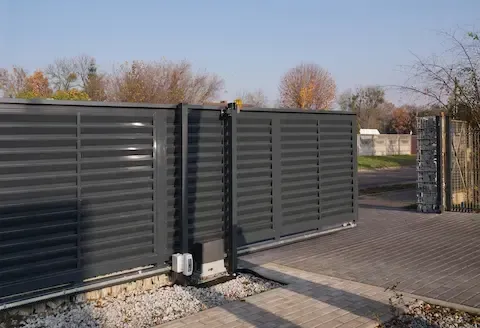
Fall Tune-Up for Automatic Gates in Abilene Taylor County
West Texas falls can fool you. The temperatures drop, the wind picks up across Taylor County, and the last thing most Abilene homeowners are thinking about is their automatic gate. But that mild seasonal shift is exactly when gate problems start quietly building. Bearings collect dust, batteries lose reserve capacity, and sensors drift out of alignment — none of it obvious until a cold January morning when the gate won't open and you're already running late. A fall tune-up takes less than an afternoon and can prevent every one of those failures before winter arrives.
Why Fall Is the Right Time for Gate Maintenance in Abilene
Abilene's climate puts automatic gates through a specific kind of stress. Summers here are brutal — sustained heat above 100°F bakes rubber seals, degrades lubricants, and pushes motors harder than they're designed to run. By the time September arrives, your gate has already absorbed months of heat strain. Then fall brings temperature swings that can range 40 degrees in a single day, causing metal components to expand and contract rapidly. That movement works loose bolts, shifts hinge alignment, and stresses welds.
Waiting until something breaks means dealing with a non-functional gate in cold weather, possibly with a repair timeline stretched by contractor availability. Getting ahead of it in October or early November puts you in control. If you're also weighing an upgrade, now is a good time to review what an automatic gate costs so you have realistic numbers if a replacement turns out to make more sense than a repair.
Lubrication: What Gets Greased and What Doesn't
The most common fall maintenance mistake is either skipping lubrication entirely or applying the wrong product. Gate systems have multiple friction points that each require specific attention.
- Hinges and pivot points — Use a white lithium grease or a dedicated gate hinge lubricant. Avoid WD-40 here; it's a solvent, not a long-term lubricant, and will thin out quickly under Taylor County temperature swings.
- Chain and rack drive systems — Sliding gates with rack-and-pinion drives need the rack teeth cleaned of debris before lubrication. A dry chain drive will wear gear teeth faster than almost any other form of neglect.
- Arm pivot on swing gates — The actuator arm connects to a pivot bracket that sees constant torque. This point should be greased every season without exception.
- Rollers and guide wheels — Sliding gates ride on rollers that collect caliche dust and gravel common on rural Taylor County driveways. Pull debris out before greasing or you're just packing dirt into the bearing.
One area you should not lubricate is the motor's internal gearbox unless you have technical documentation specific to your unit. Over-lubrication can attract dust and cause gear slippage.
Battery and Power System Checks
Solar-powered gates are increasingly common across Abilene's rural properties and acreage lots in the Taylor County area. These systems rely on battery banks to carry the gate through cloudy periods and nighttime operation. By fall, those batteries have been working through an Abilene summer, and heat is the primary cause of premature battery failure in sealed lead-acid units.
Check battery voltage under load — not just at rest. A battery can show 12.6 volts at rest and still fail to deliver enough current to cycle a gate in cold temperatures. Cold weather reduces battery output, so a battery that was marginal in October will often fail outright in December or January.
For hardwired gate systems, inspect the power connection at the control board for corrosion. Terminal corrosion creates resistance that mimics battery failure and is easy to mistake for a dead battery when the actual fix is cleaning the connection.
Sensor Alignment and Safety Loop Testing
Photo-eye sensors keep gates from closing on vehicles, animals, and people. Over a summer of heat expansion and equipment vibration, these sensors drift. A misaligned photo-eye may stop a gate mid-cycle, cause random reversals, or — more dangerously — stop triggering at all if the beam is aimed well enough to register but not reliably enough to detect an obstruction.
Test the sensor by cycling the gate and breaking the beam with your hand at various heights. The gate should stop and reverse immediately every time. If there's any hesitation or inconsistency, realign the sensor housing before winter.
If your gate has an in-ground loop detector, fall is the time to test it with a vehicle. Loops can develop breaks from ground movement — and Taylor County soil shifts meaningfully through freeze-thaw cycles even in our mild winters. A failing loop will cause erratic gate behavior that's difficult to diagnose without methodically testing each safety component.
Mechanical Inspection: What to Look at Before the Cold Sets In
Beyond lubrication, a thorough fall inspection covers the physical structure of the gate itself:
- Hinge bolt tightness — Heat expansion and contraction loosens fasteners over time. Run a wrench over every bolt on the hinge assembly and check mounting posts for movement at the base.
- Gate frame alignment — A swing gate that drags at the bottom has usually shifted at the hinge post. Catching this in fall prevents the ground freeze from making the post movement worse.
- Limit switches — These tell the motor where to stop. If a limit switch drifts, the gate may overtravel and damage the stop hardware or strain the motor. Test open and close positions and adjust if the gate is traveling past its mark.
- Weather seals on control boxes — The control board is the brain of the system. A cracked or degraded seal on the enclosure door lets in moisture that destroys circuit boards. Inspect and replace any compromised seals before winter rains arrive.
When a Tune-Up Reveals Something Bigger
Sometimes fall maintenance uncovers problems that are beyond seasonal upkeep — a cracked weld on a high-use commercial gate, a motor that draws too much current, or a control board that's showing intermittent errors. In those cases, you'll want a professional assessment rather than a DIY patch that fails in February.
If you're thinking about a system replacement or adding an automatic gate to a property that currently has a manual entry, Automatic Gate Installation done before winter is almost always easier than working around frozen ground in January. Getting it done in fall means the system has time to settle and be tested before the coldest months arrive.
Keeping Your Gate Running Through a Taylor County Winter
The automatic gates that fail in winter aren't usually the ones that were well-maintained — they're the ones that were ignored through a long Abilene summer and never given a reset before the cold. A fall tune-up covering lubrication, battery condition, sensor alignment, and structural inspection puts your gate in the best possible condition to handle whatever West Texas winter delivers. The time investment is small. The cost of an emergency repair call in January is not.
