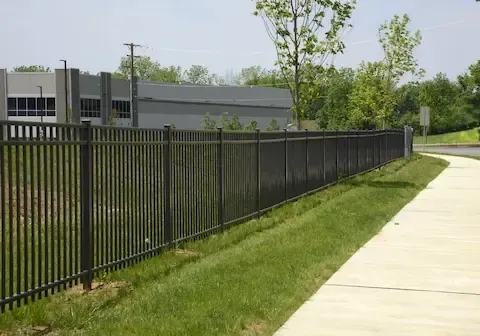
Powder Coated Iron Fences in Abilene Taylor County
Powder coating transforms raw iron from a maintenance headache into a long-term investment. In Abilene and across Taylor County, where summer temperatures regularly push past 100°F and UV radiation is relentless, the finish on your iron fence matters as much as the metal itself. Paint fades, chips, and invites rust. Powder coat holds its color, seals the surface, and survives the kind of heat cycles that strip traditional finishes within a few seasons. If you're planning an iron fence and haven't thought carefully about the coating process, you're leaving a lot of durability on the table.
What Powder Coating Actually Does to Iron
Powder coating is an electrostatically applied dry finish that bonds to the metal surface before being cured in a high-temperature oven. Unlike liquid paint, which sits on top of the metal and relies on adhesion alone, powder coat forms a dense, uniform shell around the iron. This process eliminates the thin spots and brush marks that create weak points where moisture can sneak underneath and start the rust cycle.
The cured finish is significantly harder than conventional paint. It resists scratching from routine contact, holds up against minor impacts, and doesn't peel at the edges the way painted iron does after a few freeze-thaw cycles. For wrought iron fence panels, pickets, and gate frames, that hardness translates directly into fewer touch-ups and a longer service life before any maintenance is required.
Why Taylor County's Climate Demands a Better Finish
Abilene sits in USDA Hardiness Zone 8a, but that designation understates the environmental extremes your fence actually faces. Summer sun in West Texas is intense, with UV index readings that bleach and degrade organic coatings faster than they would in more temperate regions. Afternoon temperatures on dark-colored metal surfaces can reach well above ambient air temperature, creating repeated expansion and contraction that stresses any finish applied to the exterior.
Winter isn't mild either. Hard freezes, occasional sleet, and blowing caliche dust create abrasive conditions that accelerate wear on paint finishes. Powder coat's density and chemical resistance make it substantially more stable under these conditions. The finish doesn't become brittle in cold or soft in heat the way liquid paints do. For an iron fence installed in Taylor County, powder coat isn't an upgrade — it's the appropriate baseline.
Color Selection for Abilene Properties
One of the genuine advantages of powder coating over paint is the range of colors available through professional applicators. Standard options include gloss black, flat black, bronze, dark green, and various earth tones that complement the tan and red brick architecture common in Abilene neighborhoods. Custom color matching is also possible for commercial properties or historic district installations where appearance standards apply.
Darker colors are the most popular for ornamental iron in this area, and for good reason. Deep black and bronze finishes absorb UV at the surface rather than allowing it to penetrate to the metal, which actually extends finish life compared to lighter colors where the UV can degrade the coating from within. That said, gloss finishes show surface dust more than matte options — worth considering if your property is close to an unpaved road or agricultural land where dust is constant.
Textured powder coat finishes are another option worth discussing with your installer. Wrinkle and hammer-tone textures add visual interest while also helping to conceal minor surface imperfections in older iron that has been stripped and recoated.
Powder Coat vs. Paint on West Texas Iron
Homeowners sometimes ask whether a high-quality paint job can match powder coating for durability. In a moderate climate, the gap is smaller. In West Texas, the comparison isn't close. Even premium exterior iron paints applied by professional painters typically require reapplication or significant touch-up within three to five years on Abilene properties. Powder coat applied correctly holds its integrity for ten to fifteen years or longer with basic cleaning maintenance.
The difference comes down to film thickness and cure chemistry. Paint applied in the field, even with multiple coats, can't achieve the uniform molecular density of an oven-cured powder finish. Edge coverage — the most critical area for rust prevention on iron pickets and fence rails — is consistently better with powder coat because the electrostatic application process naturally draws the coating to edges rather than leaving them thin.
If you're comparing bids and one contractor is quoting paint while another is quoting powder coat, you're not comparing the same product. The upfront cost difference is real, but so is the difference in how long that finish survives Abilene summers. For full details on what to expect from a professional installation, see our page on Wrought Iron Fence Installation.
Application Process and What to Expect
Powder coating iron fence components requires shop conditions. The metal must be cleaned, typically by sandblasting or chemical stripping, to bare metal before any coating is applied. Surface contamination — old paint, rust, mill scale, oil — causes adhesion failures and has to be fully removed. This prep work is where shortcuts get taken and where coating failures begin.
After prep, the dry powder is applied electrostatically and the components go into a curing oven at temperatures typically between 375°F and 400°F. The heat causes the powder particles to flow and chemically cross-link into a continuous film. Once cooled, the finish is ready and fully cured — no waiting period, no off-gassing, no conditional handling restrictions.
For field installations, any cuts or welds made after powder coating must be touched up with a compatible primer and paint system. Professional installers know this and carry touch-up materials. Ask specifically about how post-installation welds and mechanical connections are treated before you sign a contract.
Maintenance Expectations After Installation
A properly powder coated iron fence in Taylor County needs very little maintenance in the early years. Annual washing with mild soap and water removes accumulated caliche dust, which is mildly abrasive and acidic over time. Inspect the finish each year for any chips or scratches — particularly around gate hardware and mounting points where movement creates wear — and touch up bare metal immediately to prevent rust from establishing.
Avoid pressure washing at high PSI directly against the finish. The coating is tough, but sustained high-pressure water against the same spot can eventually compromise the surface seal. A garden hose and a soft brush handle routine cleaning without any risk to the finish. If you're also evaluating perimeter fencing for a larger property, the information in our post on ornamental iron driveway gates covers how iron and agricultural fencing work together on Taylor County land.
Choosing the Right Contractor in Abilene
Not every fencing contractor in the Abilene area handles their own powder coating, and not every powder coat shop works regularly with fence contractors. When you're getting quotes, ask directly whether the coating is done in-house or through a local applicator, what prep process they use, and what the coating warranty covers. A reputable installer will have straightforward answers and can show you examples of finished work that has been in service for several years in West Texas conditions.
Iron fencing is a long-term investment for your Abilene or Taylor County property. The powder coat finish is what determines whether that investment holds its value through fifteen years of West Texas weather or starts showing rust and deterioration in five. Getting the finish right from the beginning is the most important thing you can do for the long-term performance of your fence.
