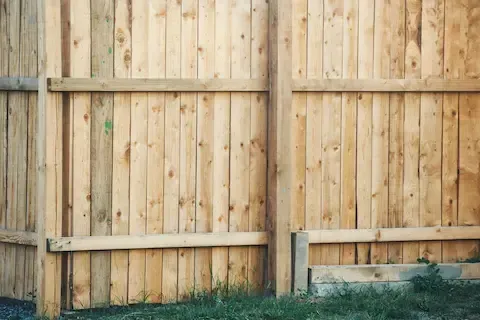
Summer Privacy Fence Staining in Abilene Taylor County
West Texas summers are not kind to bare wood. If you have a cedar or pine privacy fence on your Abilene property, the combination of triple-digit heat, intense UV radiation, and the occasional violent thunderstorm rolling in off the Llano Estacado will age untreated wood years faster than the calendar suggests. Staining is not a cosmetic luxury — it is the primary line of defense that keeps your fence boards from cracking, greying, and eventually failing. Understanding how to approach that process during summer in Taylor County makes the difference between a finish that lasts three to five years and one that peels before the next spring.
Why Summer Staining Demands a Different Approach
Staining a fence in June, July, or August in Abilene is not the same task as doing it in October. The surface temperature of a south- or west-facing fence board can climb well above 130°F on a clear afternoon, and most oil-based and water-based stains have specific application temperature windows printed on the label for a reason. When the substrate is too hot, stain penetrates unevenly, dries before it can soak into the wood grain, and leaves a blotchy, lap-marked finish that traps moisture rather than repelling it.
The practical solution is to work in the early morning window — ideally between 6 a.m. and 10 a.m. — before fence surfaces heat up. North-facing fence runs can often be stained later into the morning since they receive less direct sun, but south and west runs should be finished before midday. Evening application is a secondary option if the temperature drops below 90°F and enough drying time remains before the overnight humidity rise that sometimes accompanies summer thunderstorm patterns in Taylor County.
Choosing the Right Stain for Abilene's Climate
Not every stain sold at a big-box store is formulated for West Texas conditions. You need a product that specifically addresses UV degradation, because the solar intensity at Abilene's latitude is significantly higher than what products designed for Pacific Northwest or Midwest climates account for. Look for oil-based semi-transparent or solid stains that carry explicit UV inhibitor language on the label. Semi-transparent stains are generally preferred for newer cedar boards because they allow the natural grain to show while still providing UV protection. Solid stains are better suited for older boards that have already begun to grey and show surface checking, since they conceal existing damage while providing a more opaque protective layer.
Water-based acrylic stains have improved considerably and dry faster, which can be an advantage during humid summer mornings, but they tend to sit on the surface rather than penetrating deeply into the wood fibers the way oil-based products do. For cedar fence boards — which are porous and absorb oil-based products well — a penetrating oil formula generally delivers better long-term protection in high-heat environments. If you are considering a Privacy Fence Installation for a new property, discussing stain compatibility with the contractor at the time of installation can save you from incompatible product combinations later.
Surface Preparation Before You Apply Anything
Summer staining fails most often not because of the product chosen but because of inadequate prep work. New cedar boards need to weather for at least 30 days before staining to allow the mill glaze — a tight, compressed surface layer created during manufacturing — to open up enough for stain penetration. Boards that are stained too soon will reject the product and show premature peeling within months.
Existing fences that are being recoated require cleaning before any new stain is applied. A fence that has sat through one or more Abilene summers will have accumulated dust from the frequent wind events Taylor County experiences, along with algae in shaded or low-airflow sections, and surface oxidation on the wood fibers. Pressure washing at low-to-medium pressure removes the bulk of this contamination, but a dedicated wood cleaner or brightener product used after washing will open the grain and restore pH balance, which dramatically improves how well the new stain adheres and penetrates.
Recoat Schedules for Cedar in Taylor County
Cedar is naturally resistant to rot and insect damage, which is one reason it is the most commonly used wood for privacy fencing in the Abilene area. However, that natural resistance does not extend to UV degradation or surface drying. In Taylor County's climate, a semi-transparent oil-based stain on cedar should be inspected annually and recoated every two to three years depending on fence orientation. South- and west-facing runs will need recoating closer to the two-year mark because they absorb the most direct sun during the hottest part of the day, year after year.
A simple test for recoat timing is the water-bead test: sprinkle water on the fence surface. If it beads up, the existing stain is still repelling moisture effectively. If it absorbs immediately into the wood, the stain has degraded and recoating is overdue. Waiting too long between coats allows water to cycle in and out of the wood fibers during the summer storm season and the drier winter months, which accelerates checking and splitting in ways that no amount of staining can later reverse.
Common Mistakes That Shorten Fence Life in This Region
Applying stain to a damp surface is one of the most damaging mistakes made during summer fence maintenance in Abilene. After a rain event — and summer pop-up thunderstorms are common across Taylor County from May through September — the fence needs at least 48 hours of dry weather before staining can proceed. Moisture trapped under a stain layer cannot escape and will cause blistering, peeling, and in persistent cases, fungal growth inside the wood itself.
Overapplication is another frequent error. Stain that is applied too thick pools in the wood grain and on flat surfaces, creates a tacky film that attracts dust and debris, and ultimately peels rather than wearing gradually the way a properly thin coat does. Two thin coats with adequate dry time between them consistently outperform one heavy coat in hot-climate applications. For questions about whether your existing fence needs staining, cleaning, or structural repairs before the next coat goes on, reviewing resources on shadowbox builds for wind and other fence construction considerations in this area can provide useful context about how West Texas conditions affect wood fencing at a structural level.
Planning Your Summer Project Around Abilene's Weather Patterns
The window from late May through mid-June is often the most workable for summer staining in Abilene before the most intense heat arrives in July and August. Temperatures are still frequently in the low-to-mid 90s, morning application windows are comfortable to work in, and the risk of afternoon thunderstorm interruptions is lower than it becomes later in the summer. If July or August is your only available time, early morning scheduling is non-negotiable, and you should monitor forecasts carefully for the 24-hour window following application to avoid rain washing out a fresh coat before it cures fully.
Protecting your investment in a privacy fence through consistent, climate-appropriate staining is one of the highest-return maintenance tasks available to Abilene homeowners. The cost of stain and a few hours of labor every two to three years is a small fraction of the cost of fence replacement, and a well-maintained cedar fence in Taylor County can realistically serve 20 years or more when staining schedules are followed.
