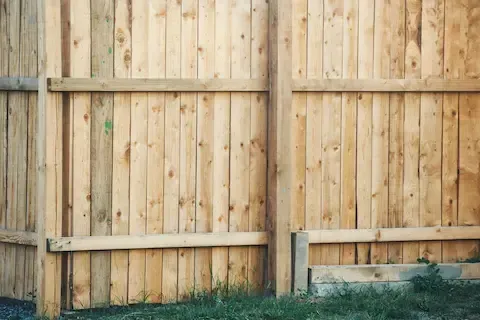
Shadowbox Privacy Fences for Abilene TX Wind Loads
Understanding Shadowbox Fence Design Principles
Shadowbox privacy fences offer a strategic solution for Abilene homeowners dealing with the persistent wind challenges that define Taylor County weather patterns. Unlike solid panel fencing that creates a complete wind barrier, shadowbox construction features alternating board placement that allows controlled airflow while maintaining privacy and structural integrity.
The alternating pattern places boards on opposite sides of the fence posts and rails, creating gaps between boards that permit wind to pass through rather than building pressure against a solid surface. This design principle reduces wind load by approximately 40-50% compared to traditional solid privacy fencing, making it particularly valuable in areas where sustained winds and sudden gusts regularly test fence durability.
Board spacing in shadowbox construction typically ranges from 1-2 inches, providing enough airflow to reduce wind resistance while preserving the privacy function that drives most residential fence installations. The overlapping pattern ensures that direct sight lines remain blocked even with the gaps present.
Wind Load Challenges in Taylor County
Abilene's location in west-central Texas exposes properties to consistent wind patterns that can stress fencing systems beyond their design limits. Spring storms frequently bring gusts exceeding 40 mph, while winter fronts can sustain winds of 25-35 mph for extended periods. These conditions create ongoing stress on fence posts, rails, and panels.
Solid privacy fences in Taylor County often fail at connection points where wind pressure concentrates force on fence posts and hardware. The continuous surface area of solid panels acts as a sail, transferring wind energy directly to the fence structure. Posts can loosen in their concrete footings, rails can separate from posts, and panels can bow or break under repeated stress.
Local soil conditions compound wind load challenges, as the clay composition common throughout Abilene can shift with moisture changes, affecting post stability. When wind pressure combines with unstable post foundations, fence failure becomes more likely.
How Shadowbox Construction Reduces Wind Pressure
The alternating board pattern in shadowbox fences creates controlled turbulence that dissipates wind energy rather than concentrating it against the structure. As wind encounters the fence, it flows through the gaps between boards, reducing the pressure differential that would otherwise push against a solid surface.
Engineering studies show that permeable fencing like shadowbox construction can reduce wind loads by 30-60% depending on the spacing and board arrangement. This reduction translates directly to less stress on fence posts, longer hardware life, and fewer maintenance requirements over time. Privacy Fence Installation professionals recognize these benefits when recommending fence styles for wind-prone areas.
The structural advantages extend beyond wind resistance to include reduced material stress from thermal expansion and contraction, which can be significant in Texas climate conditions. Boards can move slightly with temperature changes without creating stress points that lead to warping or splitting.
Installation Considerations for Wind Resistance
Proper shadowbox fence installation requires attention to post spacing, foundation depth, and hardware selection that accounts for local wind conditions. Posts should be spaced no more than 6-8 feet apart, with corner and gate posts receiving additional reinforcement through deeper footings or larger post dimensions.
Foundation depth becomes critical in wind-resistant installations, with posts typically requiring burial depths of 24-30 inches in Taylor County soil conditions. Concrete footings should extend below the frost line and provide adequate mass to resist wind-induced leverage forces on the posts.
Hardware selection should prioritize galvanized or stainless steel fasteners that resist corrosion while maintaining strength under repeated stress cycles. Rail-to-post connections require particular attention, as these joints experience the highest stress during wind events.
Board Spacing and Privacy Balance
Achieving effective wind reduction while maintaining privacy requires careful consideration of board spacing and arrangement. Gaps of 1-1.5 inches typically provide optimal wind load reduction while preserving visual privacy from most viewing angles.
The alternating pattern should position boards so that gaps on one side do not align with gaps on the opposite side, maintaining privacy effectiveness. This arrangement requires precise installation to ensure consistent spacing and proper alignment throughout the fence length.
Board width affects both wind resistance and privacy performance, with 6-inch boards providing better wind load distribution than narrower options while maintaining the structural benefits of the shadowbox design. privacy fence picks for the yard should consider these dimensional relationships during planning.
Long-term Performance in Abilene Climate
Shadowbox fences demonstrate superior longevity in Taylor County weather conditions, with properly installed systems showing minimal wind damage even after severe weather events. The reduced wind loading extends the service life of posts, rails, and hardware while maintaining structural integrity.
Maintenance requirements typically involve periodic inspection of fasteners and post stability rather than major structural repairs common with solid panel fencing. The controlled airflow through shadowbox construction also reduces moisture retention that can lead to wood deterioration in humid conditions.
Cost analysis over time shows shadowbox fences providing better value despite potentially higher initial installation costs, as reduced maintenance and replacement needs offset the upfront investment in wind-resistant design.
Material Selection for Wind Performance
Wood species selection impacts both wind resistance and longevity in Abilene installations. Cedar and treated pine offer good strength-to-weight ratios, while pressure-treated lumber provides enhanced durability against moisture and insect damage common in Texas.
Post material becomes particularly important in wind-resistant applications, with treated lumber posts requiring proper installation techniques to maximize their load-bearing capacity. Metal posts offer superior wind resistance but require different installation approaches and hardware compatibility.
Rail dimensions should match expected wind loads, with 2x8 or 2x10 rails providing better load distribution than standard 2x4 construction in high-wind applications. The additional material cost typically justifies itself through improved long-term performance.
