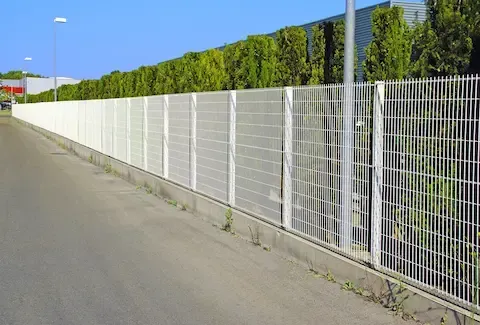
Storage Facility Fencing Across Abilene Taylor County
Self-storage operators in Abilene and Taylor County face a straightforward security challenge: your tenants are renting space to store what matters most to them, and they expect you to protect it. A well-designed perimeter fence is not optional equipment for a storage facility — it is the first and most visible layer of security your property can offer. Whether you are opening a new facility on the west side of Abilene or upgrading an older property near Highway 83, the fencing decisions you make now will shape your tenant confidence, your insurance costs, and your long-term liability exposure for years to come.
Why Storage Facilities Require Specialized Fencing
A storage facility fence is not the same as a standard commercial perimeter fence. The design has to account for a specific set of operational realities. Tenants access their units at varying hours, sometimes late at night. Drive-up units mean vehicles move through the property constantly. The perimeter needs to be secure enough to deter determined intrusion while remaining functional for daily customer traffic.
In Taylor County, where a mix of residential neighborhoods, open ranchland, and industrial corridors surround many storage properties, operators also deal with informal foot traffic and opportunistic trespass. Chain link remains the dominant material choice for storage facility perimeters because it offers high visibility, low maintenance, and fast installation across large acreage. However, the gauge of the wire, the height of the panels, and the top treatment all vary significantly based on your security goals.
Most storage facilities in the Abilene area use a minimum of 6-gauge chain link at 6 to 8 feet in height. For properties with elevated risk, 9-foot or 10-foot panels combined with barbed wire or a welded-wire top extension push intrusion difficulty high enough to redirect most casual trespassers to softer targets. The fence line itself is the deterrent — the more formidable it looks, the less likely a breach attempt becomes.
Gate Access Control Is as Important as the Fence
Perimeter chain link only works when the entry points are equally controlled. For self-storage operations, that typically means a combination of automated vehicle gates and pedestrian access points that integrate with your keypad or card reader system. A gap in gate control eliminates much of what your perimeter fence accomplishes.
Storage operators across Abilene commonly use swing gates or slide gates depending on the width of the drive lane and the available space on either side of the opening. Slide gates are more practical in tight footprints because they do not require clear swing radius on either side. For facilities with dual entry lanes — one in, one out — a double-gate configuration with a center island control post keeps traffic flowing during peak hours without compromising security.
The gate frame and post sizing matter as much as the operator mechanism. A gate that sags or shifts over time creates alignment problems that can stall the operator or leave gaps in the closure. Heavy-duty steel gate frames with properly set concrete footings ensure the gate tracks true for years without adjustment. For Commercial Fence Installation on storage properties, gate engineering is a core part of the project scope, not an afterthought.
Anti-Climb Upgrades That Storage Operators Often Overlook
Standard chain link fencing can be climbed by anyone with moderate determination. For storage facilities, that vulnerability is worth addressing directly. Anti-climb upgrades do not have to be extreme — they just have to shift the difficulty level high enough that the risk-reward calculation changes for a would-be intruder.
The most common anti-climb additions on Taylor County storage properties include barbed wire arms at the top of the fence, inward-angled extensions sometimes called coyote rollers or spin-tops, and razor wire coils for properties with higher-value tenant inventory. Each option has a different profile and cost point. Barbed wire is the most economical and the most common. Razor wire is more aggressive and is typically reserved for properties where break-ins have been a documented problem or where the tenant base stores high-value commercial inventory.
Interior fence lines between tenant unit rows also benefit from attention. Many operators fence only the perimeter and leave interior areas open. Adding low-profile interior barriers between different access zones gives tenants added separation and prevents someone who has legitimately accessed one area from freely walking the entire property.
Planning Your Fence Line Around the Property Layout
Storage facility fencing projects in Abilene are rarely simple rectangles. Properties are often oddly shaped due to lot configurations near Loop 322, frontage road restrictions along I-20, or irregular parcel lines in older parts of Taylor County. Before any post is set, a proper site walk maps the full perimeter, identifies grade changes that affect panel alignment, and locates utility easements that may restrict where posts can be driven.
Grade transitions are one of the most common complications in storage facility fencing. If the ground drops or rises along a fence line, panels can rack to follow the slope, or stepped installations can be used to maintain vertical alignment. Both approaches are legitimate, but the choice affects both appearance and security — a racked chain link panel maintains a tighter fit to grade, while a stepped installation can leave triangular gaps at the base that need to be addressed separately.
Coordinating fence placement with lighting, camera mounting points, and the keypad access system before installation begins prevents the kind of retrofit work that adds cost later. A storage facility where the fence, lights, and cameras were planned together functions better as an integrated security system than one where each element was added independently.
What Abilene Storage Operators Should Budget For
Fencing costs on storage facilities in Taylor County vary based on linear footage, panel height, gauge specification, and gate count. A straightforward perimeter installation on a mid-size facility might run several hundred linear feet. Gate systems, anti-climb upgrades, and interior zone fencing each add to the total scope. The relevant comparison for operators is not the per-foot cost against the cheapest available option — it is the cost against what a single successful break-in incident costs in stolen tenant property, liability claims, and lost lease renewals.
Insurance carriers that write policies on storage facilities in the Abilene area increasingly consider documented perimeter security during underwriting. A facility with engineered, code-compliant fencing and gated access control presents a different risk profile than one with an aging perimeter of indeterminate specification. That difference often appears in premium pricing and coverage terms.
If you are planning an upgrade to an existing facility or speccing out fencing for a new build in Taylor County, reviewing the commercial fence overview gives you additional context on how material and gauge decisions translate to long-term performance across different West Texas property types. Getting the spec right before the first post goes in is always less expensive than correcting it afterward.
