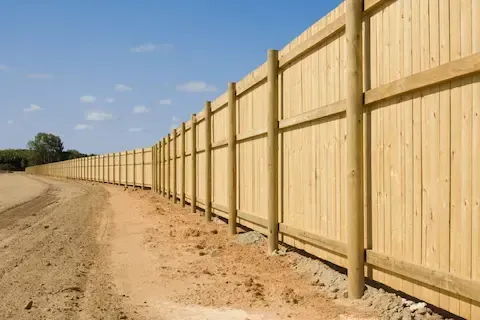
How Long Do Wood Fences Last in Abilene Taylor County
Wood fences in Abilene and Taylor County typically last 10 to 20 years, depending on the species, installation method, and maintenance routine. Cedar fences often reach 15–20 years with proper care, while pressure-treated pine generally lasts 10–15 years under West Texas conditions. The local climate — intense UV exposure, clay soil movement, and strong seasonal winds — accelerates wear faster than national averages suggest. With routine sealing, prompt board replacement, and quality post setting, you can push toward the upper end of those ranges.
Does Wood Species Affect How Long a Fence Lasts in Abilene?
Yes, significantly. Cedar is the most popular choice for Abilene homeowners because it contains natural oils that resist moisture, insects, and rot. In Zone 8a conditions, a cedar fence with good post depth and annual sealing can realistically reach 18–20 years before requiring full replacement. Pressure-treated pine is a more affordable entry point and performs reasonably well in Taylor County, but the chemical treatment only protects the wood so far — West Texas sun degrades the surface faster than in humid climates, and you may see warping or splitting within 8–10 years if maintenance is skipped. For longevity, cedar is the clear winner locally.
How Does Abilene's Climate Shorten Wood Fence Lifespan?
Taylor County presents a specific combination of stressors that most national fence lifespan guides undercount:
- UV intensity: Abilene averages over 220 sunny days per year. Unprotected wood grays, cracks, and loses structural integrity faster under this exposure than in cloudier regions.
- Wind loading: Prevailing southwest winds and seasonal gusts put constant lateral stress on fence panels. This accelerates post movement, especially in shallow or improperly set installations.
- Clay soil expansion: The shrink-swell clay common throughout Taylor County puts pressure on fence posts during wet seasons and pulls away during dry spells. This cycle loosens posts over time, leading to lean and eventual failure.
- Temperature swings: Abilene sees summer highs above 100°F and occasional hard freezes. Wood expands and contracts with these extremes, stressing fasteners and joints.
These four factors working together mean a wood fence in Abilene ages faster than the same fence installed in a milder climate. Accounting for them during installation — not just afterward — is what separates a 10-year fence from a 20-year fence.
What Maintenance Steps Extend a Wood Fence's Life in Taylor County?
Consistent maintenance is the single most controllable factor in your fence's lifespan. Here's what actually makes a difference locally:
- Seal or stain annually: A UV-blocking wood sealant applied every 12–18 months dramatically slows surface degradation under West Texas sun. Let new wood weather for 6 months before the first coat.
- Clear ground contact: Keep soil, mulch, and vegetation from sitting against fence boards. Ground contact accelerates rot at the base of pickets, which is one of the most common failure points in Taylor County.
- Replace damaged boards promptly: One rotted or cracked board left unaddressed allows moisture to migrate to adjacent boards and to the rail behind it.
- Check posts after storms: After significant wind events — which Abilene sees regularly — inspect post depth and lean. A post that has shifted even slightly is easier and cheaper to correct early than after full lean sets in.
- Inspect fasteners: Galvanized or stainless fasteners resist rust far better than standard zinc-plated nails. If you see rust streaking on your boards, the fasteners are failing and should be replaced.
If you want to understand how post installation quality affects long-term stability in local soil, this article on clay soil post setting covers the mechanics in detail.
When Should You Repair Versus Replace a Wood Fence in Abilene?
This is the most practical question homeowners face around year 10–12. A few indicators help clarify the decision:
- Repair makes sense when fewer than 20–25% of boards are damaged, posts are still plumb and solid, and rails are structurally sound.
- Replace becomes the better value when posts are leaning, rails are soft or splitting, or more than a quarter of the fence surface needs attention. At that point, board-by-board repairs often cost more over the next few years than a new installation would.
A professional inspection can clarify which category your fence falls into. For Wood Fence Installation that accounts for Abilene's specific soil and climate conditions, working with a contractor who knows Taylor County's variables from the start will extend your fence's useful life considerably.
Does Post Installation Depth Matter for Abilene Wood Fences?
It matters more here than in most places. Industry standard calls for setting posts at one-third the total post length in the ground — so a 9-foot post should sit 3 feet deep. In Taylor County's clay soil, this minimum is non-negotiable. Shallow posts in shrink-swell soil will begin leaning within a few seasons as the soil contracts and expands around them. Concrete backfill helps anchor posts, but proper depth is the foundation of that stability. A fence with posts set correctly can outlast one with premium cedar boards on poor posts by 5–7 years.
